

As buildings become increasingly digital and interconnected, the way data is structured, interpreted and shared across systems is becoming a central challenge for the building automation industry. Modern Building Management Systems (BMS) must be able to collect, interpret and analyse data from a wide variety of devices, protocols and subsystems in order to support energy efficiency, operational performance and user comfort.
One of the most important initiatives addressing this challenge is Project Haystack, an open-source initiative created to standardize how data is described and tagged in building systems.
What is Project Haystack?
Project Haystack is an open initiative that defines a standardized methodology for tagging building data. In practice, it introduces a common dictionary of tags that describe the meaning of data generated by devices and systems within a building, such as sensors, meters, HVAC equipment or lighting systems.
Rather than relying solely on proprietary naming conventions or protocol-specific definitions, Haystack uses semantic tagging to describe data in a way that can be easily interpreted by software applications.
This means that each data point is associated with descriptive tags that define its function, context and relationship with other elements in the building system.
For example, a temperature sensor might be tagged with descriptors such as:
- sensor
- temperature
- zone
- air
By using standardized tags, software platforms can automatically understand the role of each data point and how it relates to the building infrastructure.
Why Tagging is Important in Building Automation
Systems that use semantic tagging for all data points can automatically generate:
- plant schematics and system diagrams
- building layouts and equipment relationships
- operational dashboards
- alarms and notifications
- energy consumption reports
- real-time performance analytics and diagnostics
This level of automation significantly reduces the effort required to configure and integrate building systems while improving data transparency and system interoperability.
The importance of open platforms becomes evident in this context. Many traditional BMS solutions rely on proprietary software environments or support only a limited number of communication protocols. When additional protocols or systems must be integrated, gateways or additional software layers are often required.
Open platforms, on the other hand, are designed to manage data from multiple sources and protocols, simplifying system integration and enabling the creation of unified visualization and analytics environments.
When tagging capabilities such as those defined by Project Haystack are combined with open platforms, the result is a powerful architecture capable of collecting, organizing and analysing data across the entire building ecosystem.
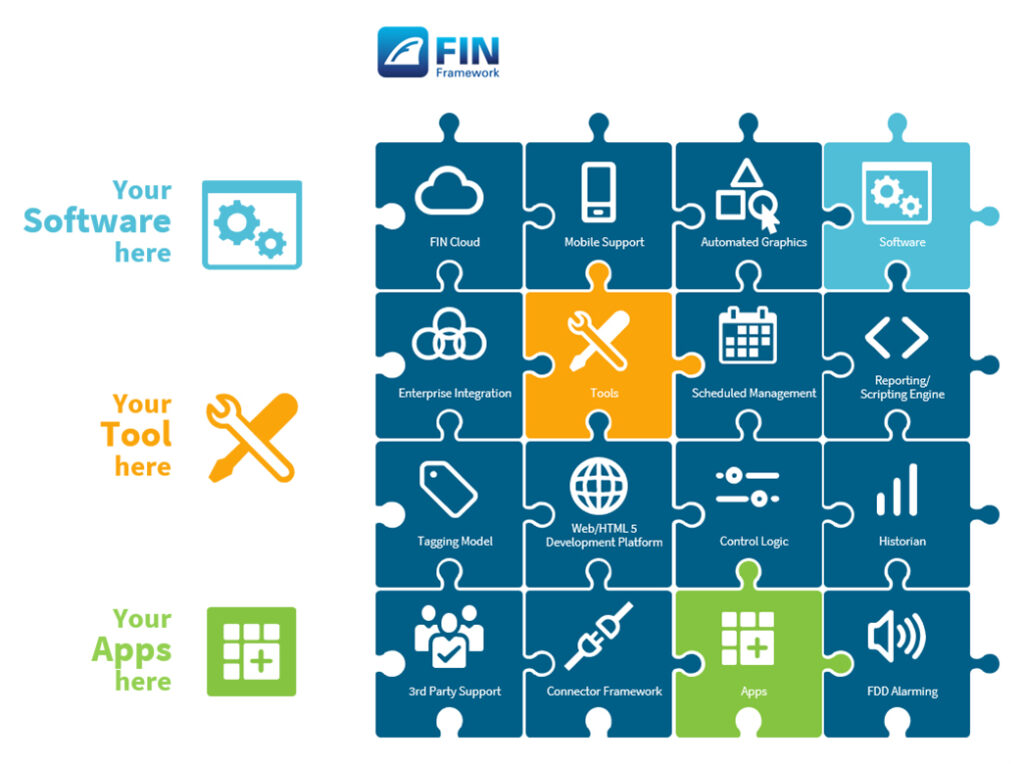
FIN Framework: A Tag-Based Platform for Smart Buildings
One of the platforms that has embraced the Project Haystack philosophy is FIN Framework, the open software platform for building automation developed by J2 Innovations.
FIN Framework was designed from the ground up to support semantic tagging and Haystack standards, enabling software applications to automatically interpret building data and dramatically simplify the development of BMS applications.
This approach allows the automated generation of:
- graphical interfaces
- alarm management systems
- operational dashboards
- performance reports
By reducing the amount of manual configuration required, tagging-based platforms such as FIN Framework can significantly accelerate the deployment of building management systems while enabling more advanced diagnostics and analytics capabilities.
Open Platforms and the Evolution of Building Data
Before the adoption of semantic tagging and initiatives like Project Haystack, the definition of data points and messages was often tightly linked to the specific communication protocol used in the building control system.
Today, open software platforms such as FIN Framework can read and interpret data from multiple systems, regardless of the protocol used, as long as communication occurs over IP networks using modern data exchange technologies such as:
- MQTT
- JSON
- REST APIs
These technologies are widely used in the IT world and are increasingly becoming the foundation for modern building automation systems.
As Project Haystack continues to grow, its tagging model is expected to extend beyond traditional building systems into enterprise software environments. This includes platforms such as:
- CAFM and CMMS systems
- asset management platforms
- parking management systems
- meeting room and desk booking systems
- workplace management platforms
The ability to connect building data with business applications will open new possibilities for integrated building intelligence and operational efficiency.
Coster Group and the Open Ecosystem
Coster Group is part of this open innovation ecosystem and actively supports the adoption of Haystack tagging through its building automation solutions and through the integration of the FIN Framework platform.
By leveraging open standards and interoperable architectures, Coster Group enables system integrators and building operators to build scalable and future-ready building management systems capable of integrating data from multiple technologies and devices.
As buildings typically have operational lifecycles measured in decades, the ability to rely on open platforms and standardized data models becomes essential to ensure long-term flexibility and avoid technological lock-in.
The building automation industry is therefore moving toward a new paradigm: open software platforms, standardized data tagging and interoperable systems capable of connecting building technologies with the broader digital infrastructure of modern organizations.
Through its continued investment in open technologies and advanced building management platforms, Coster Group supports the transition toward smarter, more efficient and fully data-driven buildings.